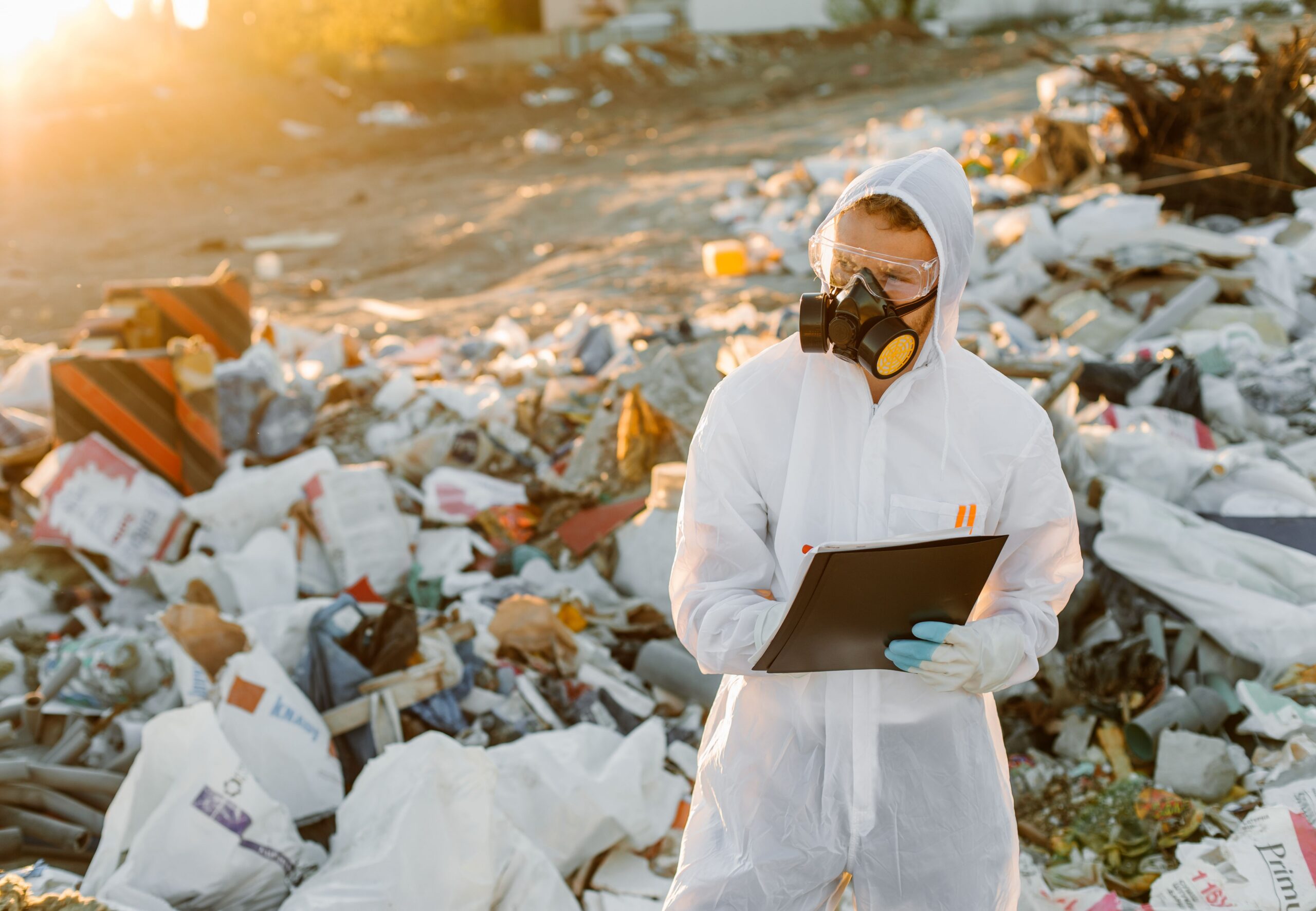
The inspector has shown up to your facility unannounced. She’s in the waste-accumulation area, scouring the manifest from last month. She takes note of who signed it and asks to see the person’s training record; he’s a research associate who started seven months ago, someone you judge to be competent at his job. But your opinion isn’t what this is about. The inspector wants his training record. How quickly can you produce it? And will it hold water?
Hazardous waste training requirements come from three federal rulebooks, each with its own deadlines, plus whatever your state adds. It can seem overwhelming, but once you map those rules onto the people in your building, the program mostly runs itself. Here’s how to build it in five steps.
Primer: Three Rulebooks Govern Your Lab’s Waste Training
Before you assign a single course, sort out which hazardous waste training requirements apply to your site. For most life sciences labs, the list looks something like this:
- RCRA, large quantity generators: 40 CFR 262.17(a)(7) requires a formal training program, directed by someone trained in hazardous waste management, with written job descriptions and records.
- RCRA, small quantity generators: 40 CFR 262.16(b)(9)(iii) requires that employees be “thoroughly familiar with proper waste handling and emergency procedures” for their duties.
- DOT: 49 CFR 172.704 covers anyone who prepares, packages, labels, or signs for regulated waste leaving your site.
- OSHA Laboratory Standard: 29 CFR 1910.1450(f) requires training on the hazards of the chemicals your people handle.
Academic labs operating under EPA’s Subpart K have their own training provision. Because states can set stricter rules than the federal baseline, always check your state’s version of the RCRA training requirements before you finalize your training program.
Your generator status (very small, small, or large quantity, based on how much hazardous waste you produce each month) drives much of what we’ll discuss next, so confirm it with whoever handles your hazardous waste management before you build anything out.
Step 1: List Every Role That Touches Lab Waste
Take a walk through the full life of a waste container and write down every role that interacts with it:
- Researchers and technicians who generate waste at the bench
- Your waste coordinator or chemical hygiene officer
- Anyone who signs manifests or shipping papers
- Shipping and receiving staff
- Custodial, facilities, or contract staff who move containers
Lab waste disposal often runs through people who never think of themselves as waste handlers, and those are the gaps inspectors are good at finding.
Still defining who owns what in your facility? This overview of your broader EHS compliance responsibilities is a useful starting point.
Step 2: Map Each Requirement to Each Role
Now build a simple matrix: roles down the side, rulebooks across the top. Mark which hazardous waste training requirements cover each person. Most people will only need one or two columns. The same patterns hold for nearly every lab:
- Bench researchers need OSHA Lab Standard training and RCRA training on labeling, container management, and satellite accumulation.
- Manifest signers and waste packagers need RCRA training plus DOT hazmat training. That includes anyone who packages regulated medical waste for transport, which DOT also regulates.
- Facilities and contract staff need enough training to recognize waste, avoid mishandling it, and respond to a spill.
The matrix becomes the backbone of your laboratory waste management program. When someone changes roles, you look at their row and know what training they need next.
Step 3: Put Every Deadline on One Calendar
Each rulebook runs on its own clock. Put them all on one calendar so nothing slips through the cracks:
- At initial assignment: OSHA Lab Standard training, and again before a new exposure situation
- Within 90 days: DOT hazmat training after hire or a change in job function
- Within six months: initial RCRA training at large quantity generators
- Every year: an annual review of RCRA training at large quantity generators
- Every three years: DOT recurrent training, at minimum (PHMSA summarizes the hazmat training rules for employers)
Until someone finishes their training, they must work under the direct supervision of a trained employee. Build that into onboarding, so new hires shadow a trained colleague before they handle waste on their own. Because the RCRA training requirements and the OSHA refresher cycle fall at different times, you can schedule one combined lab safety training session each year and add the DOT refresher every third year.
Step 4: Build the File an Inspector Will Ask For
Under 262.17(a)(7)(iv), large quantity generators must keep the following records at the facility:
- The job title for each position related to hazardous waste management, and the name of the person in it
- A written job description for each of those positions
- A written description of the type and amount of initial and continuing training for each position
- Records showing that each person completed that training
Keep records for current staff until the facility closes, and for former employees for at least three years after they leave. DOT records must be kept for as long as the person works as a hazmat employee, plus 90 days.
Small quantity generators face lighter documentation rules, but a dated sign-in sheet and course outline costs you little and proves due diligence. Your records file is where hazardous waste training requirements either hold up or fall apart.
Step 5: Train on Your Own Containers and Procedures
Site-specific training sticks better than generic courses. The most effective lab safety training uses your own accumulation areas, labels, spill kits, and contingency plan. Revisit training whenever something changes: a new waste stream, new building, near miss, or an inspection finding. Those moments tell you where your lab waste disposal procedures and your training have drifted apart.
If you’d rather not build every course yourself, Clym Environmental offers onsite, customized waste disposal safety training covering RCRA, DOT/IATA hazmat, hazard communication, PPE, HAZWOPER, and spill response. Each class includes a course outline, training materials, and documentation for your records file.
A Program That Runs Without Chasing
Try to anticipate how the next inspection will play out. The inspector asks for training records, and you hand over a complete file: roles, job descriptions, training plans, and completion dates. The conversation moves smoothly onto something else.
This is what a well-built program delivers. You’ve mapped the hazardous waste training requirements to every role, set one calendar, and kept the proof. Your laboratory waste management no longer depends on your memory. It runs on a system anyone on your team can follow.
Clym Environmental can build that system with you:
- Reach out. Reach out and tell us about your lab.
- Map your needs. A Clym EHS specialist assesses your roles, waste streams, and training gaps.
- Train your team. Clym delivers customized training onsite, with the documentation your records file needs.